A new peer-reviewed study led by our postdoctoral researcher Dr Michael Franklin, published in Restoration Ecology, provides some of the clearest evidence to date on the effectiveness of common restoration interventions in degraded Australian eucalypt woodlands. The findings offer practical guidance for land managers and restoration planners seeking to improve outcomes in heavily modified landscapes.
Why this research matters
Eucalypt woodlands across Australia have experienced long-term declines due to clearing, grazing, invasive species and altered fire regimes. While a wide range of restoration methods are frequently used, the actual evidence supporting these interventions has remained fragmented.
Dr Franklin’s study addresses this gap through a meta-analysis of 35 studies, modelling the effectiveness of six key restoration treatments across 11 ecological response metrics using a Bayesian multi-level framework.
The authors note the urgent need for stronger, evidence-based restoration, writing:
“We found a paucity of adequate studies… and a lack of effectiveness in common interventions.”
What the study found
The research shows uneven performance across commonly used interventions.
Interventions showing consistent positive effects
Sugar (carbon) addition increased native plant responses by 43%
Burning boosted native plants by 27% and cryptogams by 91%
Woody debris addition improved soil moisture (35%) and soil carbon (21%)
These treatments showed the clearest evidence of supporting ecological recovery.
Interventions that require caution
Slashing had a low probability of benefiting native plants (0.33) and a high probability of increasing introduced plants (0.83)
Herbicide had a very low probability of benefiting native vegetation (0.09), with unclear impacts on weed suppression
Planting alone did not restore native plant communities nor reduce introduced species or soil phosphorus
A call for more experimental restoration
The study emphasises the need for restoration programs to integrate experimental trials, including reference and control plots, to quantify how interventions perform under real conditions. It also highlights the importance of publishing results - successful or not - to build a stronger evidence base for restoration practice.
Read the full paper in Restoration Ecology.
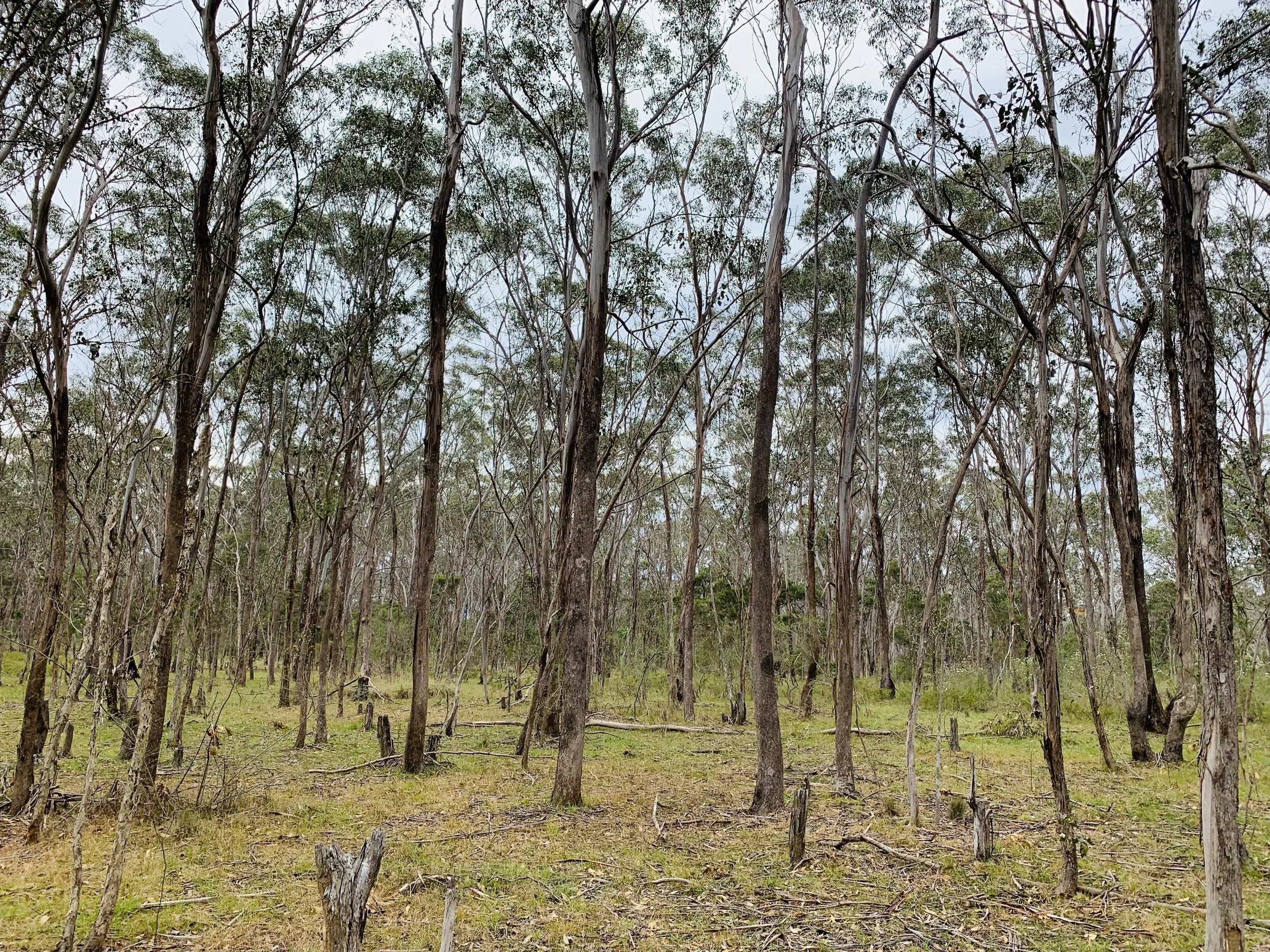
Woodland structure at a Cumberland Plain field site. Photo: Chaminda Alahakoon