New research uncovers how canopy diversity supports woodland resilience
How can the mix and structure of trees shape life on the forest floor?
New research led by Dr Michael Franklin and colleagues from the Hawkesbury Institute for the Environment in collaboration with Greater Sydney Local Land Services has revealed that diverse, structurally varied tree canopies support more native herbs in grassy woodlands across Western Sydney.
Using data from the Cumberland Plain Research Program’s 93 long-term monitoring plots, the team found that tree species richness increased native herb diversity by around 28%, while tree size diversity boosted grass cover. The findings also show that targeted thinning of dense small trees are predicted to enhance understorey growth, offering a practical tool for woodland restoration.
Read the full paper in Biological Conservation.
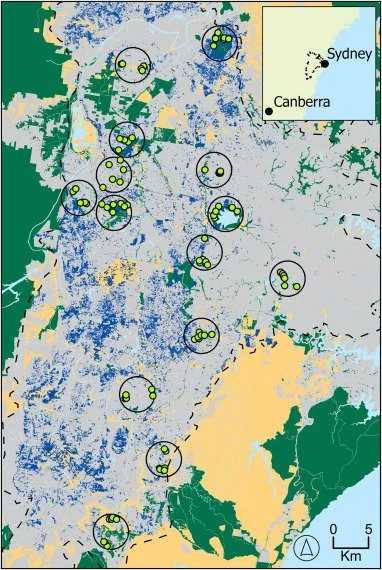
Cumberland Plain Monitoring plots.
(For interpretation of the references to colour in this figure legend, the reader is referred to the web version of this article.)